Latest Kitchen Trends for 2026: Kitchen Cabinet Styles, Colours & Design Ideas
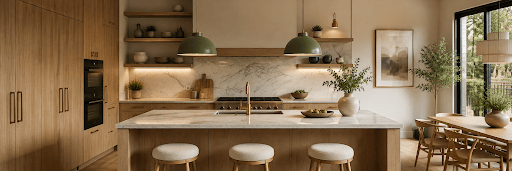
Kitchen design in 2026 is moving toward warmer materials, quieter colours, better storage, and spaces that feel connected to the rest of the home. Rather than following one dramatic style, homeowners are choosing kitchens that combine natural character with clean lines and practical features.
The latest trend in kitchens is therefore less about one fashionable finish and more about creating a kitchen that feels warm, functional, cohesive, and built for everyday life.
Current industry research supports that direction. NKBA’s 2026 Kitchen Trends Report, based on feedback from 634 kitchen and design professionals across North America, identifies natural materials, seamless design, storage maximization, earthy aesthetics, smart technology, and whole-home continuity among the major themes shaping kitchens.
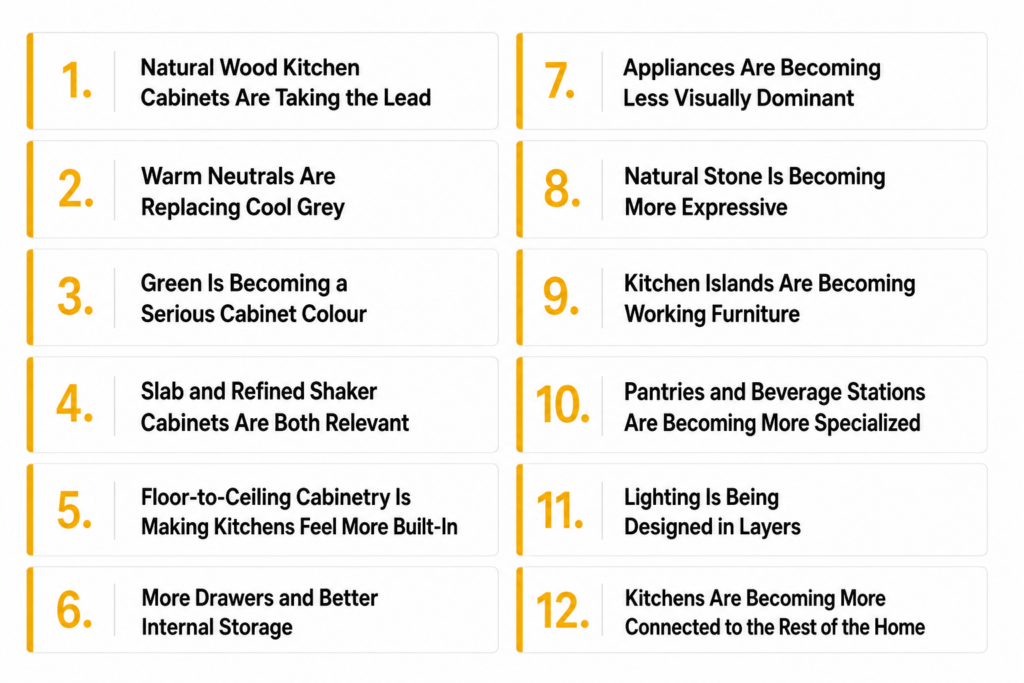
Here are the kitchen and kitchen cabinet trends defining 2026.
1. Natural Wood Kitchen Cabinets are Taking the Lead
One of the clearest changes in 2026 is the return of visible wood grain.
For years, painted white cabinets dominated kitchen renovations. Now homeowners are increasingly choosing cabinetry that allows the natural texture and variation of wood to become part of the design.
NKBA reports that 59% of professionals expect wood-grain cabinetry to grow in popularity, with white oak identified as the leading wood species by 51% of respondents. Wood became the most selected cabinet finish in its 2026 U.S. study, narrowly moving ahead of white.
Popular directions include:
- White oak cabinetry
- Light and medium wood tones
- Natural walnut
- Matte wood finishes
- Wood islands paired with painted perimeter cabinets
- Vertical grain patterns
- Simple cabinet profiles that allow the material to stand out
The goal is not to recreate the heavy wood kitchens of previous decades. Current designs use cleaner lines, lighter finishes, and restrained detailing.
For Toronto homeowners planning a renovation, natural cabinetry can also work particularly well when the kitchen needs to coordinate with hardwood flooring and other elements throughout an interior home renovation.
2. Warm Neutrals are Replacing Cool Grey
Grey is no longer the default neutral it once was.
The 2026 colour palette is considerably warmer, with kitchens moving toward tones inspired by stone, soil, wood, and nature.
Common choices include
- Warm white
- Cream
- Mushroom
- Taupe
- Sand
- Beige
- Clay
- Soft brown
- Muted olive
These shades provide the flexibility of a neutral kitchen without the colder appearance associated with some white-and-grey combinations. NKBA’s 2026 research found neutrals remain extremely important, while greens, blues, and browns are also expected to play a significant role in kitchen colour schemes.
This does not mean white kitchens have disappeared. Instead, bright white is increasingly being softened with warm wood, natural stone, textured tile, or warmer off-white cabinetry.
3. Green is Becoming a Serious Cabinet Colour
When homeowners want more colour, green is one of the strongest choices for 2026.
Sage, olive, moss, eucalyptus, and deeper forest tones work naturally alongside wood, stone, brass, and warm neutral finishes. The result can feel distinctive without becoming overly trend-driven.
Green can be introduced through:
- An island
- Lower cabinets
- A pantry
- Full cabinetry
- A backsplash
- Interior cabinetry
- Decorative features
For homeowners hesitant to commit to coloured cabinets throughout the entire kitchen, using green on an island provides a more restrained way to introduce the trend.
4. Slab and Refined Shaker Cabinets are Both Relevant
There is no single cabinet door style defining 2026. Instead, two directions are particularly noticeable.
Flat-Panel Cabinetry
Flat or slab-front cabinetry suits contemporary and minimalist kitchens. NKBA reports that 69% of professionals see slab cabinet doors gaining popularity.
The style works especially well with:
- Natural wood
- Integrated appliances
- Minimal hardware
- Handleless systems
- Large-format stone
- Clean architectural lines
Slimmer Shaker Profiles
Shaker cabinetry remains relevant, but the proportions are becoming more refined. Narrow rails and stiles provide some traditional detail without making the kitchen feel heavily ornamented.
This makes slim Shaker cabinetry particularly suitable for transitional kitchens, where homeowners want a balance between classic and contemporary design.
In fact, transitional and timeless kitchens remain the strongest overall style direction in NKBA’s current forecast.
5. Floor-to-Ceiling Cabinetry is Making Kitchens Feel More Built-In
Another significant development in kitchen cabinet trends is the move toward full-height storage.
Cabinetry extending to the ceiling can make the kitchen feel more architectural while reducing unused space above upper cabinets.
It can be particularly effective for storing:
- Seasonal cookware
- Small appliances
- Serving pieces
- Pantry goods
- Cleaning supplies
- Less frequently used dishes
Full-height cabinetry is also being used to create entire storage walls containing refrigerators, ovens, pantries, and concealed appliances.
The result is visually quieter because several functional elements can be incorporated into one continuous composition.
For smaller homes, vertical storage becomes even more valuable. Our guide to renovated small kitchens explains how layout and storage decisions can help make limited kitchen space work harder.
6. More Drawers and Better Internal Storage
The outside of the cabinets may be becoming simpler, but the inside is becoming more sophisticated.
Homeowners are increasingly prioritizing storage systems designed around specific items rather than filling a kitchen with standard cupboards.
Useful options include:
- Wide pot-and-pan drawers
- Pull-out waste and recycling centres
- Vertical tray storage
- Spice pull-outs
- Deep drawers with adjustable dividers
- Corner storage systems
- Appliance garages
- Pantry pull-outs
- Internal utensil organizers
- Charging drawers
The design principle is straightforward: countertops can remain cleaner when frequently used items have a convenient place to be stored.
7. Appliances are Becoming Less Visually Dominant
One of the more refined kitchen design trends for 2026 is making appliances feel like part of the cabinetry rather than separate objects.
Panel-ready refrigerators and dishwashers allow cabinet fronts to continue across the appliance, creating a more uniform appearance. NKBA’s forecast shows growing interest in both panel-faced refrigeration and dishwashers.
Other approaches include:
- Built-in wall ovens
- Concealed range hoods
- Appliance garages
- Integrated coffee stations
- Microwave drawers
- Refrigerators incorporated into full-height cabinet walls
This approach is especially effective in open-concept homes because the kitchen feels less utilitarian when viewed from adjoining living and dining areas.
8. Natural Stone is Becoming More Expressive
Cabinetry is becoming quieter, but stone is often being allowed to make a stronger statement.
Quartz remains an important practical countertop material, while natural quartzite is gaining attention for homeowners seeking distinctive movement and variation. NKBA’s report places natural quartzite close behind quartz among emerging countertop preferences.
Current applications include:
- Full-height stone backsplashes
- Strong natural veining
- Waterfall or wrapped island details used selectively
- Matching countertop and backsplash materials
- Thick stone edges
- Softer honed finishes
The important change is restraint. Rather than combining several competing patterns, many 2026 kitchens allow one distinctive material to become the focal point.
9. Kitchen Islands are Becoming Working Furniture
The kitchen island continues to be important, but its purpose is becoming more carefully planned.
A successful island may now combine:
- Food preparation
- Seating
- Drawer storage
- Waste and recycling
- A dishwasher
- A secondary sink
- Beverage refrigeration
- Charging
- Serving space
In some kitchens, a contrasting island also provides an opportunity to introduce natural wood or colour while keeping the surrounding cabinetry neutral.
The size still needs to suit the room. An oversized island that restricts circulation is not automatically more functional than a smaller, properly proportioned one.
If you are developing a renovation budget around features such as custom cabinetry, an island, stone countertops, and new appliances, our guide to how much kitchen renovations cost provides additional planning considerations.
10. Pantries and Beverage Stations are Becoming More Specialized
Storage is extending beyond conventional kitchen cabinets.
Dedicated pantry areas, coffee stations, beverage centers, and secondary preparation spaces are increasingly being planned around the household’s actual routines.
Pantry cabinets are now the most common built-in kitchen feature in its 2026 study, while beverage stations rank second.
Depending on available space, this could mean:
- A tall pantry cabinet
- A walk-in pantry
- A butler’s pantry
- A coffee station
- A beverage refrigerator
- A breakfast cabinet
- A separate prep area
Not every kitchen needs all of these features. The stronger trend is customization: deciding what the household regularly uses and designing storage around it.
11. Lighting is Being Designed in Layers
One ceiling fixture is rarely enough for a well-designed kitchen.
Current kitchens typically combine several types of lighting:
- General lighting provides overall illumination.
- Task lighting improves visibility over counters, sinks, cooktops, and other work areas.
- Under-cabinet lighting illuminates work surfaces without relying on ceiling fixtures.
- Interior cabinet lighting can make glass-front cabinets and storage areas easier to use.
- Decorative lighting adds character above islands, dining tables, or breakfast areas.
NKBA’s 2026 research found natural, quality, and task lighting among the highest-rated kitchen design priorities, while under-cabinet, interior cabinet, and pendant lighting are all expected to remain prominent.
12. Kitchens are Becoming More Connected to the Rest of the Home
Perhaps the most important 2026 trend is not a cabinet colour or countertop material at all.
The kitchen is increasingly designed as part of a broader interior composition.
Wood tones may repeat in the living room. Cabinet colours can relate to nearby walls and furniture. Flooring may continue across several spaces. Metal finishes, lighting, millwork, and architectural details can also create visual continuity.
This is particularly important in Toronto homes with open kitchens, dining, and living spaces. When several adjoining rooms need to work together, planning them as part of a home renovation in Toronto can create better flow and a more consistent design.
Rather than asking, “What kitchen is trending?” it can be more useful to ask, “What kitchen belongs in this home?”
That approach is also important when developing custom home designs, where the kitchen can be coordinated with architecture, room proportions, circulation, windows, and interior finishes from the beginning.
Which 2026 Kitchen Trends are Worth Following?
Not every trend needs to become part of your renovation.
Some of the strongest ideas for long-term use are also practical improvements:
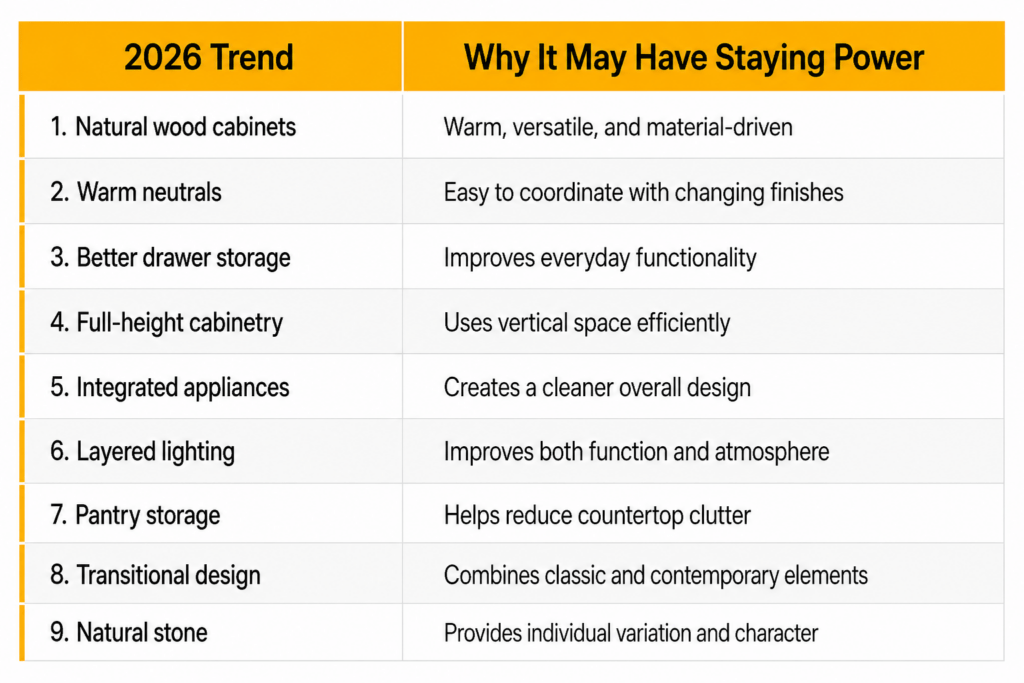
More decorative ideas can then be introduced through features that are easier to update, such as lighting, cabinet hardware, paint, stools, and accessories.
If the goal is to refresh an existing kitchen without undertaking a complete redesign, see our guide to an inexpensive kitchen renovation for ideas on where targeted improvements can make the greatest difference.
What Kitchen Cabinet Trends are Going Out of Style in 2026?
Design preferences are moving away from several approaches that dominated previous renovation cycles.
These include:
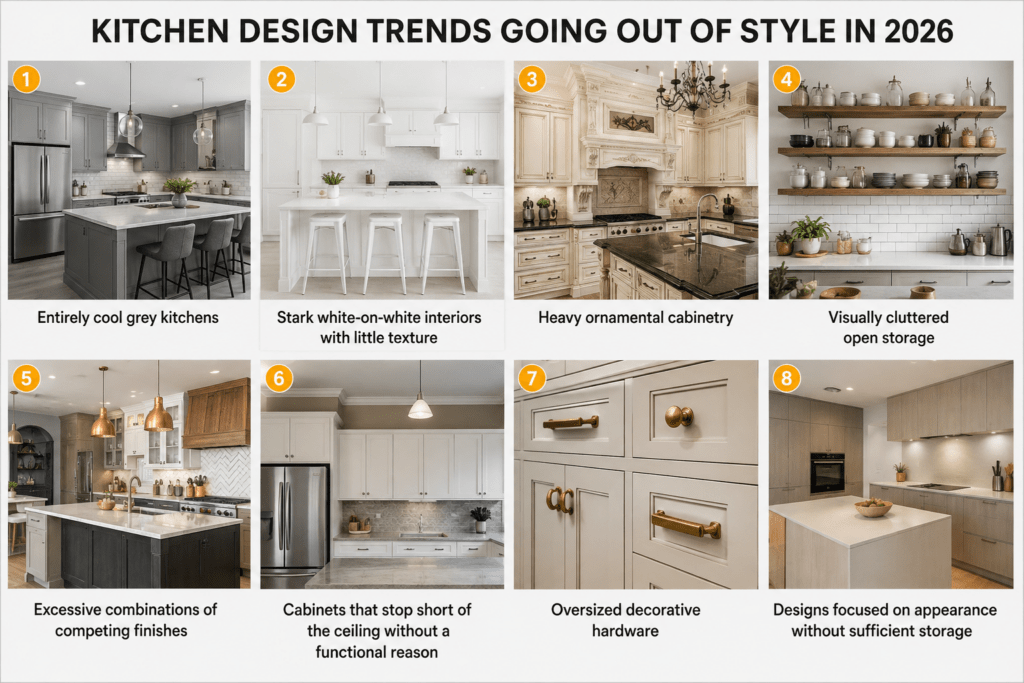
This does not mean every white kitchen, grey finish, or open shelf is outdated. The broader change is toward greater warmth, restraint, natural texture, and practical design.
Designing a Kitchen That Still Feels Current After 2026
The best kitchen renovations do not depend entirely on trends.
Use current design ideas to improve the space, but make major decisions around the architecture of the home, household needs, available space, and long-term functionality.
For cabinetry, that may mean choosing a durable wood or timeless painted finish. For storage, it means identifying what actually needs to fit inside the kitchen. For colour and materials, it means creating combinations that work with the rest of the home rather than selecting each finish independently.
The strongest 2026 kitchens feel current because they are warmer, simpler, better organized, and more personal rather than because they follow every new design idea.
Planning a kitchen renovation in Toronto? Bianco Design & Build can help coordinate the layout, cabinetry, materials, lighting, and construction into one cohesive design tailored to your home and the way you use it.
FAQs
What is the latest trend in kitchens for 2026?
The latest trend in kitchens is warmer, more natural design, including wood cabinetry, earthy colours, integrated storage, and cleaner layouts.
What kitchen cabinet colours are trending in 2026?
Warm neutrals, natural wood tones, olive green, sage, taupe, cream, and soft brown are among the leading colours.
What are the biggest kitchen cabinet trends in 2026?
Key kitchen cabinet trends include natural wood finishes, slab doors, slim Shaker profiles, floor-to-ceiling cabinetry, and improved internal storage.
Are white kitchen cabinets still popular?
Yes. White cabinets remain popular, but warmer whites and combinations with wood, stone, or coloured cabinetry are becoming more common.
Is natural wood cabinetry in style for 2026?
Yes. Natural wood, especially lighter oak tones, is one of the strongest trends kitchen cabinets are following in 2026.
Are Shaker cabinets going out of style?
No. Shaker cabinets remain popular, although slimmer and more refined profiles are becoming more common in contemporary kitchens.