
Custom Built Homes Prices: What Affects the Final Cost?

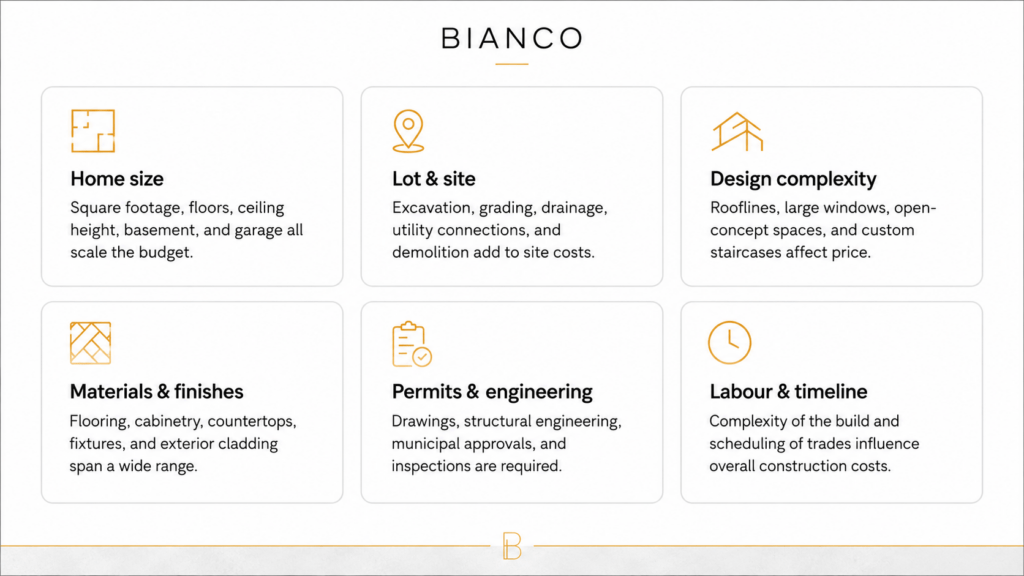
The cost of building a custom home depends on more than square footage. Your vision, lot conditions, design complexity, materials, finishes, permits, and construction requirements shape it.
Unlike buying a pre-built home, a custom home is priced around the details that make the property unique. The layout, structure, exterior style, interior finishes, and site conditions all play a role in the final number.
At Bianco Design & Build, we help homeowners plan custom homes with a clear design-build process from concept to construction. Our goal is to make the planning, budgeting, design, permit, and building stages easier to understand so homeowners can move forward with confidence.
Why Custom-Built Home Prices Vary So Much
Custom-built home prices are not fixed because every project is different. Two homes with the same square footage can have very different budgets depending on the design, structure, materials, and site.
The final price can be affected by:
- Lot size and site conditions
- Home size and layout
- Architectural complexity
- Foundation and structural needs
- Interior and exterior finishes
- Custom features
- Permit and design requirements
- Labour and construction timeline
It also helps to understand the difference between production homes and custom homes. Production homes are usually built from standard plans on land owned by the builder, which can make them more predictable and cost-efficient. Custom homes, on the other hand, are designed around the homeowner’s specific layout, finishes, site conditions, and construction needs. Because of that added flexibility and detail, custom homes usually cost more than production-built homes, especially when the design includes premium materials or complex architectural features.
That is why early planning matters. The more clearly the design, budget, and construction needs are understood from the beginning, the easier it becomes to make smart decisions.
Main Factors That Affect the Cost of Building a Custom Home
Canadian building costs can vary widely by location. For example, production home costs may start around the lower end in markets such as Halifax or Ottawa and rise significantly in higher-cost areas like Vancouver. Custom home pricing is usually higher because it depends on design complexity, finish level, labour, materials, and the condition of the lot. This is why square-foot pricing should only be treated as a starting point, not a final estimate.
Size of the Home
The size of the home is one of the biggest factors in the cost of custom home building. More square footage usually means more materials, more labour, more structural work, and more finishing details.
The budget can also change based on:
- Number of floors
- Basement plans
- Garage size
- Ceiling height
- Number of bedrooms and bathrooms
- Open-concept spaces
- Storage areas
- Specialty rooms
A larger home not only increases framing and foundation costs. It also affects plumbing, electrical, HVAC, flooring, windows, doors, drywall, paint, trim, lighting, and interior finishes.
Lot and Site Conditions
The property itself can have a major impact on the final cost. Before construction begins, the lot needs to be reviewed carefully to understand what work is required.
Site-related costs may include:
- Demolition of an existing structure
- Excavation
- Grading
- Drainage work
- Soil conditions
- Tree removal
- Access to the property
- Utility connections
- Driveway preparation
- Waterproofing needs
A flat, easy-to-access lot may be simpler to build on. A lot with poor soil, limited access, drainage issues, or an existing home that needs to be removed can add more work before the actual build begins.
Design Complexity
Design choices have a direct impact on custom-built homes’ prices. A more detailed design often requires more planning, engineering, materials, and labour.
Complex design features can include:
- Detailed rooflines
- Large or custom windows
- Open-concept structural spans
- Feature staircases
- Custom layouts
- Exterior stone or brick details
- Vaulted ceilings
- Covered outdoor areas
- Unique architectural elements
These features can create a beautiful home, but they also need to be planned carefully so the budget matches the design direction.
Materials and Finishes
Finishes are one of the areas where costs can change quickly. Flooring, cabinetry, countertops, tile, fixtures, lighting, appliances, doors, windows, and exterior materials all influence the final price.
For example, standard cabinetry will usually cost less than custom millwork. Basic tile will usually cost less than natural stone. Standard windows will usually cost less than oversized or custom windows.
This does not mean every selection needs to be the most expensive option. A strong design-build process helps homeowners decide where to invest and where to keep selections more practical.
Permits, Drawings, and Engineering
Before construction can begin, the home needs the right drawings, approvals, and technical planning.
This can include:
- Architectural drawings
- Structural engineering
- Municipal approvals
- Permit applications
- Zoning review
- Site plans
- Inspections
- Revisions, if required
These steps are an important part of building a safe, legal, and well-planned custom home. They also help reduce surprises once construction begins.
Cost of Custom Home Building: Where the Budget Goes
A custom home budget includes many different stages. Understanding where the money goes can help homeowners see the full picture, not just the visible finishes.
Common budget categories include:
- Design consultation and planning
- Architectural drawings
- Engineering
- Permit applications
- Demolition or site preparation
- Excavation and foundation
- Framing
- Roofing
- Windows and exterior finishes
- Plumbing, electrical, and HVAC
- Insulation and drywall
- Kitchen and bathroom work
- Flooring, paint, and trim
- Lighting and fixtures
- Landscaping and exterior details
- Final inspections
- Contingency budget
The early stages may not feel as exciting as choosing finishes, but they are essential. Good planning, proper engineering, and organized construction management help protect the project from costly issues later.
Custom Home Cost vs. Buying an Existing Home
Buying an Existing Home
Buying an existing home can offer a faster move-in timeline. The home is already built, the neighbourhood is established, and the purchase process may feel more straightforward.
However, many homeowners still need to budget for renovations, repairs, layout changes, or upgrades. An older home may need a new kitchen, bathroom updates, flooring, windows, roofing, plumbing, electrical work, or basement improvements.
So while the purchase price may seem clearer upfront, the long-term cost can change once updates are considered.
Building a Custom Home
Building a custom home requires more planning, but it gives homeowners more control.
You can make decisions around:
- Layout
- Room sizes
- Energy efficiency
- Materials
- Finishes
- Storage
- Lighting
- Kitchen and bathroom design
- Basement use
- Outdoor living areas
- Long-term lifestyle needs
A custom home can be designed around how you actually live, not just what is available on the market. The process is more detailed, but the result can be more personal, functional, and future-focused.
As a general reference, Canadian production home costs can range from about $140 to $320 per square foot, depending on the city, while custom homes are usually higher. Some industry sources estimate that custom homes can cost 2.5 to 4 times more than production homes, depending on complexity, materials, and scope. These numbers should be treated as general benchmarks only, since every custom home needs to be priced based on its lot, design, permits, finishes, and construction requirements.
How Design Choices Influence Custom-Built Home Prices
Design decisions can raise or lower the overall cost of building a custom home. Even small choices can affect materials, labour, engineering, and timelines.
Here are a few common examples:
- Simple rooflines vs. complex roof structures
A simple roof design is usually more cost-effective. A complex roof with multiple slopes, peaks, dormers, or details can increase framing, roofing, and labour costs. - Standard windows vs. oversized or custom windows
Large windows can bring in more natural light and create a high-end look, but they can also increase material, installation, and structural costs. - Basic finishes vs. luxury materials
Flooring, tile, countertops, fixtures, and cabinetry can shift the budget significantly depending on the level of finish selected. - Standard cabinetry vs. custom millwork
Custom millwork adds personality and function, but it requires more design, fabrication, and installation time. - Regular ceiling heights vs. vaulted or detailed ceilings
Higher ceilings, vaulted ceilings, beams, and ceiling details can create a beautiful result, but they may require more structure and finishing work. - Simple layouts vs. open-concept structural changes
Open-concept spaces often require beams, engineering, and careful planning, especially when larger spans are involved.
The best approach is not always to choose the cheapest option. It is to understand which choices matter most to you and how each decision affects the total budget.
Hidden Costs to Plan for When Building a Custom Home
Some costs are easy to overlook during the early planning stage. These hidden or less obvious expenses can affect the final budget if they are not discussed early.
Homeowners should plan for:
- Permit and application fees
- Engineering revisions
- Utility upgrades
- Demolition surprises
- Temporary housing
- Material upgrades
- Drainage or waterproofing needs
- Landscaping
- Driveway work
- Window coverings and furniture
- Changes made during construction
A contingency budget is important because construction can involve unexpected conditions, especially when working with land, foundations, demolition, or municipal requirements.
Planning ahead gives homeowners more flexibility and helps reduce stress during the build.
How to Set a Realistic Custom Home Budget
A realistic custom home budget starts with clear priorities. Before finalizing the design, homeowners should understand what they need, what they want, and where they are willing to invest more.
Here are a few practical tips:
- Start with your must-haves
Focus first on the features that matter most, such as the number of bedrooms, kitchen layout, family living space, basement use, garage needs, and outdoor areas. - Decide where you want to invest most
Some homeowners care most about the kitchen. Others want a luxury primary suite, a finished basement, large windows, or better outdoor living. Knowing your priorities helps guide the budget. - Keep a contingency amount
A contingency gives you room for unexpected costs or changes. This is especially important for site work, demolition, drainage, and material selections. - Choose finishes early
Early finish selections help the team price the project more accurately and reduce delays later. - Avoid too many changes once construction begins
Changes during construction can affect materials, labour, timelines, and budget. The more decisions made during the design stage, the smoother the build can be. - Get design and construction input before finalizing plans
A design may look great on paper, but it also needs to make sense for the budget, property, permits, and construction process. - Work with a team that explains budget decisions clearly
Homeowners should understand why costs change and how each design choice affects the overall project.
When Should You Speak with a Custom Home Builder?
Homeowners should speak with a custom home builder early, before finalizing drawings or making major design decisions.
Early guidance can help align the home design with:
- Your budget
- Your property conditions
- Permit requirements
- Zoning rules
- Structural needs
- Construction timelines
- Material and finish choices
This early input can help prevent overdesigning, missed costs, and changes that become more expensive later.
How Bianco Design & Build Helps with Custom Home Planning
Bianco Design & Build helps homeowners plan and build custom homes with a complete design-build approach. From early design ideas and layout planning to permits, construction, and finishing details, Bianco keeps the process organized under one team so homeowners can make clearer decisions at every stage.
Our related services include:
- Custom home design-build
- Luxury custom homes
- New home construction
- Full home renovations
- Home additions and extensions
- Kitchen renovations
- Bathroom renovations
- Basement renovations
By bringing design and construction together, homeowners can make decisions with a better understanding of cost, timing, structure, and finish options.
Build Your Custom Home with Bianco
The cost of building a custom home depends on many moving parts, but the right team can make the process easier to understand.
With thoughtful planning, clear design direction, and organized construction management, your custom home can be built around your lifestyle, priorities, and long-term goals.
Ready to explore the cost of custom home building? Contact Bianco Design & Build to start planning your custom home with a team that can guide the project from design to completion.
FAQs
- What is the average cost of building a custom home?
The cost depends on the size of the home, lot conditions, design complexity, materials, finishes, permits, and construction requirements. A custom home should be priced based on the specific design and property details.
- Why do custom-built homes’ prices vary so much?
Prices vary because each custom home has a different layout, structure, design style, finish level, lot condition, and construction scope. No two custom homes are exactly the same.
- What affects the cost of custom home building the most?
The biggest factors are square footage, site preparation, foundation work, structural design, material selections, labour, permits, and custom features.
- Is building a custom home more expensive than buying a house?
It can be, depending on the location, design, finishes, and site conditions. However, building a custom home gives homeowners more control over layout, materials, energy efficiency, and long-term function.
- How can I control the cost of building a custom home?
You can control costs by setting clear priorities, choosing finishes early, limiting major changes during construction, keeping a contingency budget, and working with a design-build team from the beginning.
- Can Bianco Design & Build help with custom home building?
Yes. Bianco Design & Build helps homeowners plan and complete custom home projects through a design-build process that includes planning, design, permits, construction, and finishing details.